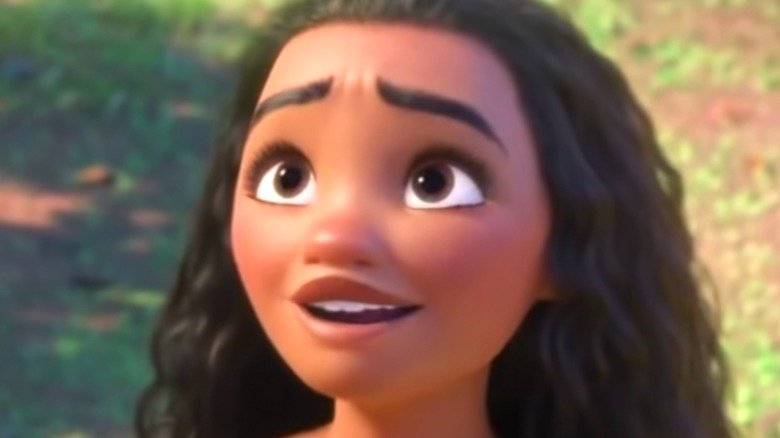
Fan Theories And Discussions Debate Moanas Exact Age
Have you ever wondered about the precise age of Moana, the tenacious voyager from Motunui? You’re not alone. The world of Fan Theories and Discussions Around Moana's Age is vibrant, filled with passionate debates among viewers eager to pinpoint exactly where she stands on the cusp of adulthood. While Disney’s Moana doesn't explicitly state her age, a wealth of in-movie clues, cultural context, and keen observations have fueled fascinating discussions, all aiming to understand the nuances of her transformative journey.
Understanding Moana's age isn't just trivia; it deepens our appreciation for her immense courage, burgeoning leadership, and the universal themes of growth and self-discovery that define her story. Let's navigate these intriguing theories and discover what the collective wisdom of fans and cultural insights suggest.
At a Glance: Moana's Age in Focus
- Not Explicitly Stated: The movie never gives a definitive number for Moana’s age.
- Common Consensus: Most fans and experts agree she is likely around 16 years old.
- Age Range: Theories generally place her between 14 and 19 years old.
- Key Evidence: Village council calling her a "grown woman" ready to lead, consistent with Polynesian cultural norms for coming-of-age.
- Underlying Impact: Her age significantly influences our perception of her courage, maturity, and the weight of her responsibilities.
The Great Debate: Why Moana's Age Matters to Her Story
The question of Moana's age isn't simply a detail; it's a narrative anchor. Whether she's 14, 16, or even 18, each age framework casts a different light on her journey. A younger Moana might imply a more impulsive, almost childlike bravery, while an older one might suggest a seasoned maturity already accustomed to leadership pressures. The fact that the story leaves it ambiguous, yet provides enough clues to spark discussion, is a testament to its rich character development.
This ambiguity invites us to consider the pressures she faces, the emotional burdens she carries, and her extraordinary strength. It's about more than just a number; it’s about the context of her heroism and the relatability of her struggle to find her path.
The Case for 16: The Widely Accepted View
Among the many fan theories and discussions around Moana's age, the idea that she is around 16 years old garners the most support. This isn't just a random guess; it's backed by a compelling blend of narrative cues, character portrayal, and cultural understanding.
The most persuasive piece of evidence comes directly from the Motunui village council. They unequivocally refer to Moana as "a grown woman" who is "ready to lead." This isn't a casual remark; it's a formal acknowledgment of her readiness to step into the role of chief. In many ancient Polynesian cultures, the age of 16 was a significant marker for transitioning into adulthood, often accompanied by rites of passage that recognized maturity, responsibility, and leadership potential. For a princess destined to lead her people, being considered a "grown woman" at 16 aligns perfectly with these traditional structures.
Furthermore, Moana's physical characteristics and emotional maturity strongly suggest she’s a teenager, but not an extremely young one. She possesses the physical strength and endurance to undertake a perilous ocean voyage, yet still exhibits moments of youthful idealism and occasional self-doubt that resonate with the teenage experience. Her developing personality, a complex mix of determination and vulnerability, feels right for a 16-year-old on the brink of profound self-discovery. If you want to dive deeper into the general consensus, explore Moanas age in Moana 1.
Diving Deeper: Other Age Theories and Their Roots
While 16 is the reigning theory, the rich discussions among fans have explored other possibilities, each with its own logic and interpretations.
The "Young Princess" Theory: Around 14 Years Old
Some fans propose Moana might be closer to 14. This theory often stems from her youthful appearance and, at times, what is perceived as a lack of extensive experience before her voyage. Proponents might argue that her initial hesitation to defy her father, Chief Tui, and her occasional moments of uncertainty, are more characteristic of a younger teenager. If she were 14, her courage in setting sail alone and confronting demigods would appear even more extraordinary, emphasizing her innate bravery over acquired wisdom. This age would underscore the idea of a child stepping into an adult role far beyond her years.
The "Older Princess" Theory: 18 or 19 Years Old
On the other end of the spectrum, some theories suggest Moana could be 18 or 19. This perspective highlights the immense responsibility placed upon her shoulders and the level of maturity she displays throughout her epic quest. Taking on the mantle of leadership, mastering wayfinding, and confronting figures like Te Kā demand a certain gravitas and experience. An 18- or 19-year-old Moana would possess a more developed sense of self and a greater capacity for independent decision-making, making her journey a story of a young adult solidifying her destiny rather than a child discovering it. Her clear leadership qualities, evident from early in the film, might be seen as more fitting for someone slightly older than 16.
Unpacking the Clues: What the Movie Tells Us (And What It Doesn't)
Beyond the council's pronouncements, the film offers a few other breadcrumbs that add to the intrigue surrounding Moana's age.
One often-cited reference comes from Grandmother Tala, who states that Moana's father, Chief Tui, was born when Tala was 10 years old. While some interpretations, as noted in general discussions, have tenuously tried to link this to Moana being around 10 herself, this particular piece of dialogue primarily serves to establish generational history and Tala's long-standing connection to the island's lore. It doesn't directly provide a strong age indicator for Moana herself, beyond confirming she belongs to the next generation after Tui.
More significantly, the visual storytelling consistently portrays Moana as being past childhood but not yet fully an adult in the societal sense. Her voice has matured, her physical stature is that of a young woman, and she's clearly grappling with adult responsibilities. This visual and auditory evidence points away from a very young age (like 10-12) and supports her being in her mid-to-late teens.
The movie deliberately focuses on her emotional and spiritual growth, allowing her age to be a flexible canvas upon which these developments unfold. This narrative choice prevents the story from being boxed in by a specific numerical age, instead emphasizing the process of coming of age.
The Cultural Lens: Polynesian Traditions and Adulthood
Understanding the cultural backdrop of Moana is crucial to appreciating the age debate. The film is deeply steeped in Polynesian culture and mythology, where the concept of adulthood and readiness for leadership often differed from Western norms.
As mentioned, 16 was a significant age in many ancient Polynesian societies, marking a transition from adolescence to young adulthood. It was an age where individuals, especially those of royal lineage, would begin to take on more significant responsibilities within the community. Skills like navigation, fishing, farming, and community management would be expected to be mastered, and the ability to contribute meaningfully to the tribe's welfare would be paramount.
Moana's journey, therefore, can be viewed as a traditional coming-of-age narrative, where she must prove her worth and demonstrate her capabilities to earn her place as a leader. Her successful quest, her ability to restore the heart of Te Fiti, and her eventual role as wayfinder and chief, all serve as powerful rites of passage. These achievements are far more significant than a mere birthdate; they signify her transition into a true adult leader in the eyes of her people and the ocean itself. Exploring more about Polynesian coming-of-age traditions can illuminate this further.
Why Disney Keeps It Vague: Storytelling Implications
The creative decision to keep Moana's exact age unspoken is a masterstroke of storytelling. By not explicitly stating her age, Disney achieves several key narrative advantages:
- Universal Relatability: It allows a broader audience, from pre-teens to young adults, to connect with Moana's journey of self-discovery. Viewers of different ages can project themselves onto her, seeing elements of their own struggles and triumphs in her story.
- Focus on Growth: The ambiguity shifts the focus from a concrete number to the process of growth. The story isn't about being 16; it's about becoming a leader, a voyager, and a guardian of her people, regardless of the precise chronological age at which that transformation occurs.
- Cultural Sensitivity: Given the nuanced and varied definitions of adulthood across different cultures, leaving the age open respects the diverse interpretations and avoids imposing a singular, potentially Western-centric, age marker.
- Character Depth: It emphasizes her individual journey and inner strength. Her age becomes less about a statistic and more about the internal fortitude that allows her to overcome immense challenges. This deepens our understanding of Moana's developing personality.
This deliberate vagueness ensures that the story's core message—finding your true self and fulfilling your destiny—remains at the forefront, unencumbered by a precise numerical age.
The Impact of Age on Moana's Journey
Consider how Moana's perceived age influences our interpretation of her actions:
- If she's 14: Her initial defiance of her father, her decision to leave the island, and her ability to stand up to Maui would be seen as incredibly audacious for someone so young. It would highlight an almost childlike fearlessness.
- If she's 16: Her actions are framed as a powerful coming-of-age narrative. She's old enough to understand the gravity of her decisions but young enough to still be finding her place, making her journey a relatable teenage struggle for identity and purpose. This age grounds her story in a period of intense personal change.
- If she's 18-19: Her journey becomes less about finding herself and more about confirming her already established self-worth and leadership capabilities. The stakes would still be high, but her inherent maturity would make her quest feel less like a test of nascent abilities and more like a heroic undertaking by a fully formed adult.
Each age theory, therefore, subtly shifts the emotional resonance and perceived difficulty of her epic adventure. The prevailing theory of 16 strikes a balance, allowing her to be both impressively capable and authentically vulnerable, capturing the essence of being a young leader burdened with extraordinary responsibilities. Comparing her journey to the ages of other iconic Disney heroines often places her among those experiencing significant personal growth during adolescence.
Your Burning Questions About Moana's Age, Answered
Let's clear up some common points of confusion or curiosity regarding Moana's age.
Q: Is there any official statement about Moana's age from Disney?
A: No, Disney has consistently avoided giving an explicit age for Moana. This ambiguity is intentional, allowing for broader interpretation and focusing on her character arc rather than a specific number.
Q: Why do so many people believe she's 16?
A: The most significant evidence is the village council referring to her as "a grown woman" ready to lead. This, combined with Polynesian cultural norms where 16 marked adulthood and leadership readiness, makes it the most widely accepted and contextually supported theory.
Q: Does Moana's age change throughout the movie?
A: The story primarily focuses on her as a teenager undertaking her voyage. While we see glimpses of her as a toddler and a young child, the main narrative arc presents her at a consistent age, likely around 16. The journey is one of growth, not chronological aging within the main story.
Q: How does her age compare to other Disney princesses?
A: Moana's presumed age of 16 places her in a similar age range to many other Disney princesses during their main stories, such as Ariel (16), Rapunzel (18), and Mulan (16-18, though not a princess by birth). This age often coincides with pivotal moments of self-discovery and destiny.
Q: Does Moana's age affect her ability to lead?
A: In the context of the story and ancient Polynesian culture, her age (around 16) is seen as perfectly appropriate for assuming leadership. Her journey proves her capability and wisdom, making her ready, regardless of a precise number.
Beyond the Numbers: The True Meaning of Moana's Journey
Ultimately, while the fan theories and discussions around Moana's age are incredibly engaging and insightful, the precise number isn't the most important takeaway. What truly resonates is the journey itself: a young woman, on the cusp of adulthood, answering a profound call to adventure and saving her people.
Moana's story is a powerful testament to inner strength, connection to heritage, and the courage to forge one's own path. Whether you imagine her as a spirited 14-year-old, a determined 16-year-old, or a mature 18-year-old, her impact remains the same. She embodies the universal experience of coming of age, facing monumental challenges, and discovering the hero within. Her age simply provides a backdrop for a timeless tale of bravery, destiny, and the unyielding spirit of the ocean.