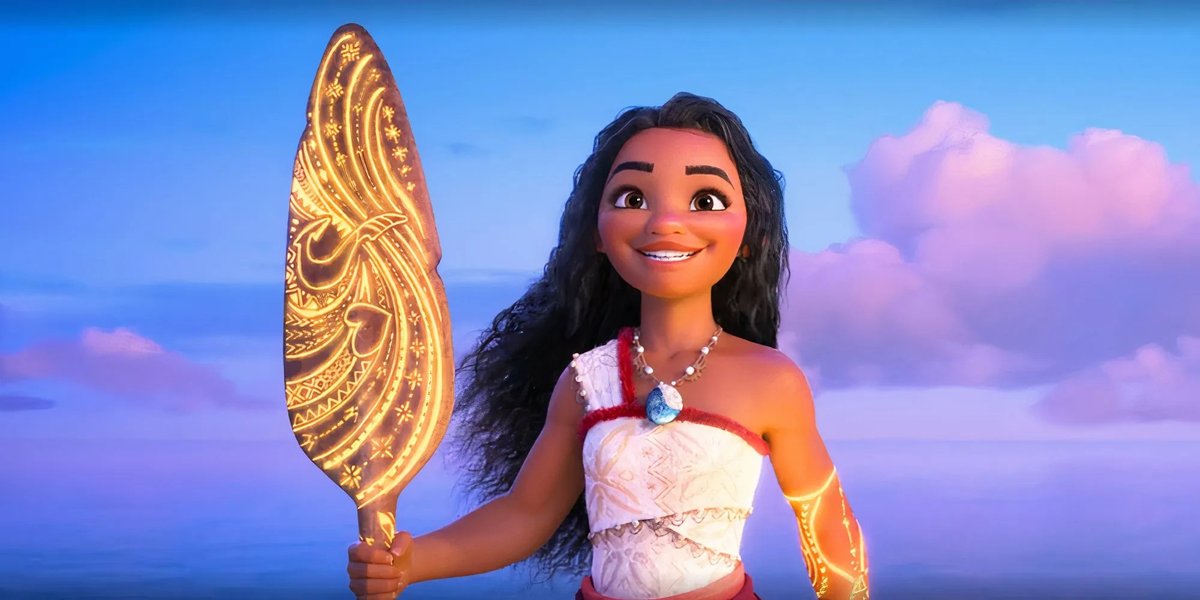
In the vibrant heart of the Pacific, a powerful story of self-discovery, leadership, and environmental stewardship unfolds through the eyes of Moana, a spirited Polynesian chieftain’s daughter. Her journey is often celebrated for its stunning animation and empowering message, but what many might overlook is The Significance of Moana's Age to Her Journey and Role. At just 16 years old, Moana’s specific stage of life isn't an arbitrary detail; it’s the very bedrock upon which her entire adventure, her relationships, and her profound impact on her people are built. This isn't just a coming-of-age story; it’s a story perfectly calibrated by the protagonist's age.
At a Glance: Why Moana's Age Matters
- Coming-of-Age Arc: At 16, Moana is poised at the threshold of adulthood, making her journey of self-discovery and leadership incredibly relatable.
- Youthful Courage: Her age fuels her determination to challenge tradition, make bold decisions, and undertake a seemingly impossible mission.
- Relatability: Audiences, particularly younger ones, see themselves in her struggles, mistakes, and ultimate triumphs.
- Intergenerational Dynamics: Her youth creates essential contrasts with the ancient wisdom of Tala and the millennia-old experience of Maui, forging dynamic relationships.
- Symbol of Hope: As the youngest leader, she represents a new generation's capacity to confront and solve long-standing problems, especially environmental ones.
- Empowerment: Her story emphasizes that true leadership isn't about age or experience, but about courage, conviction, and connection to one's purpose.
Why 16? The Sweet Spot for Heroism and Humanity
Imagine Moana as significantly younger, say 10. While still courageous, her capacity for complex decision-making, her defiance of a chief (her father), and the weight of her people’s survival might feel too heavy, stretching the bounds of belief. Now imagine her at 25. Her journey of "self-discovery" might carry different stakes, perhaps less raw and more settled, losing some of the visceral energy that defines her quest. No, 16 is the precise, perfect age.
At 16, Moana stands on the cusp of adulthood. She's old enough to possess a strong sense of identity, demonstrate mature reasoning, and take on formidable responsibilities, yet still young enough to harbor the idealism, occasional naivety, and boundless energy characteristic of youth. This duality makes her an incredibly compelling and authentic character. It’s an age of significant personal growth, where the world is opening up, and one's place within it is still being forged. This makes Moana's age in Moana 1 a crucial element of the narrative's success. She isn't merely going on an adventure; she's undergoing a profound transformation into the leader her people need, precisely because she's at this pivotal age.
Compared to other iconic Disney princesses, Moana’s age places her firmly among those embarking on transformative personal journeys: Ariel at 16, Snow White at 14, and Belle at 17. These ages are consistently chosen for protagonists whose stories revolve around profound changes in their lives, often involving challenging norms, finding love, or discovering their true purpose. For Moana, that purpose is inextricably linked to her identity and her people's survival.
The Coming-of-Age Crucible: Growth Through Struggle
Moana’s journey is, at its heart, a classic coming-of-age story, amplified by the dire stakes for her island. Her age allows for a specific kind of growth that wouldn't resonate as deeply at another point in her life.
Embracing Mistakes and Learning Curves
A 16-year-old is expected to make mistakes. They are still figuring things out, testing boundaries, and learning from experience. Moana is no exception. She’s confident, yes, but not infallible. Her initial attempts to sail beyond the reef are clumsy. Her first interactions with Maui are fraught with missteps and arguments. These aren't failures; they are crucial learning opportunities that define her growth. A much older, more experienced protagonist might be expected to navigate these challenges with more ease, lessening the impact of her triumphs. But because Moana is 16, her struggles feel more authentic and her eventual mastery of wayfinding and leadership more earned.
Challenging Traditions and Forging New Paths
Teenagers often question authority and tradition. This youthful inclination is vital to Moana's character. Her father, Chief Tui, represents the established order and the fear of the unknown that led Motunui to stop voyaging. At 16, Moana possesses the courage and idealism to challenge her father's deeply ingrained beliefs and the island's restrictive policies. She respects her heritage but refuses to be bound by its current limitations, driven by an innate desire to save her people. Her age grants her the unique position of being of the community but not yet fully entrenched in its leadership, providing the necessary distance to critically assess its direction and advocate for change. This rebellious spirit, born of her youth, is what propels the entire plot forward.
Relatability for a Global Audience
For countless young viewers, Moana's age makes her incredibly relatable. They are grappling with their own identities, questioning expectations, and dreaming of a future beyond their current horizons. Seeing a 16-year-old protagonist wrestle with universal themes—identity, responsibility, destiny, and the courage to follow her heart—resonates deeply. Her journey mirrors the internal adventures many teens undertake, albeit with higher stakes. This relatability is a powerful engine for the film's message, encouraging young people to find their own voices and pursue their unique paths.
A Bridge Between Worlds: Youthful Energy Meets Ancient Wisdom
Moana's age is not only significant for her internal development but also for the dynamics of her relationships with the key figures in her life, particularly her grandmother Tala and the demigod Maui. These intergenerational relationships are central to the film’s narrative, and Moana’s position as a 16-year-old acts as a crucial bridge.
Moana and Tala: The Intergenerational Bridge
Grandmother Tala, in her late 70s, embodies the ancient wisdom, traditions, and ancestral knowledge of her people. She is Moana’s spiritual guide and the keeper of the forgotten history of the voyagers. The age gap between them is profound, yet their bond is incredibly strong. Moana's youth allows her to be receptive to Tala’s unconventional wisdom. A more cynical or older protagonist might dismiss Tala’s eccentricities, but Moana, with the open-mindedness of a teenager still forming her worldview, listens. She trusts Tala implicitly, absorbing the stories and understanding the deeper meaning of her "crazy" grandmother's counsel.
Tala's role is to awaken Moana to her true calling, passing on the legacy of wayfinding. Moana's age ensures she's not too set in her ways to accept this mantle, nor too young to comprehend its gravity. She has the intellectual capacity to grasp complex cultural narratives and the emotional maturity to bear their weight, making her the perfect recipient of Tala's final teachings.
Moana and Maui: The Mentor-Mentee Dynamic
Maui, a demigod thousands of years old, represents vast experience, immense power, and a legendary past. His age stands in stark contrast to Moana’s, creating an immediate and compelling mentor-mentee dynamic—one often filled with tension and humor.
Maui’s initial arrogance and self-centeredness are challenged by Moana’s unwavering determination and youthful idealism. A younger child might be too easily intimidated by Maui's immense presence, while an older, more established adult might lack the patience or deference required to win him over. Moana, at 16, possesses the perfect blend of respect and audacity. She's young enough to look up to the legends surrounding Maui, yet mature enough to call him out on his flaws, push back against his cynicism, and ultimately inspire him to reclaim his heroic self. Her youth is precisely what allows her to chip away at Maui’s hardened exterior, reminding him of the pure intentions and hopeful spirit he once embodied. Her fresh perspective and lack of jadedness are precisely what he needs to heal his ancient wounds. This dynamic hinges entirely on how old Moana is at the start of her adventure.
The Burden of Leadership: Moana's Environmental Call
The central conflict of "Moana" is the ecological blight threatening Motunui, a clear metaphor for environmental degradation. Moana’s age is central to her ability to confront and ultimately solve this crisis.
A New Generation's Response to Old Problems
The ecological decay affecting Motunui is a problem that has grown over time, reaching critical levels. Chief Tui, Moana’s father (in his mid-40s), represents the generation that chose insularity and caution, believing the best way to protect his people was to stay within the reef. While his intentions are good, his approach is no longer sustainable.
Moana, as a 16-year-old, embodies the new generation. She is untainted by past failures and unburdened by the same fears that constrain her elders. Her youthful determination and fresh perspective are essential for addressing the crisis. She symbolizes the potential for change and renewal that often resides in younger generations, who are often more willing to innovate and take risks for the future. Her ability to see beyond the immediate fear and embrace the forgotten legacy of her ancestors is what allows her to seek a solution proactively. It's a powerful message: the young are often the ones who must rise to solve the problems inherited from previous generations.
Defiance and Vision
Moana's journey is an act of defiance against her father's command. At 16, she’s grappling with the tension between filial duty and a deeper calling to her people. This internal conflict is deeply relatable. Her decision to sail beyond the reef, despite the clear danger and her father’s prohibition, isn't mere rebellion; it's a testament to her nascent leadership and unwavering commitment. Her age gives her the idealism and courage to act on her vision, even when it means challenging the very person she respects most. This balance between respect for tradition and the drive for necessary change is a hallmark of her character, largely enabled by her specific developmental stage.
Beyond Princess: A Leader's Ascent
"Moana" purposefully subverts many classic Disney princess tropes. Moana’s age plays a significant role in positioning her as a new kind of protagonist: a leader defined by duty, identity, and environmental responsibility, rather than romance.
At 16, while she is a chief's daughter, her narrative focuses almost entirely on her self-discovery and her quest to save her people. There is no romantic interest, a deliberate choice that highlights her autonomy and the primacy of her mission. Her age allows her to be seen as a strong, independent young woman perfectly capable of forging her own path without needing a prince. This shifts the focus from finding a partner to finding her purpose and leading her community, making her a powerful role model for contemporary audiences.
Her journey is one of becoming a "wayfinder," not a monarch. She is learning the skills of navigation, leadership, and resilience, which are practical and essential for her role. Her youthful energy and ability to absorb new knowledge are crucial to her transformation from an island-bound chief-in-training to a master voyager who re-establishes her people's connection to the sea.
Common Misconceptions About Her Age and Role
Despite the careful crafting of her character, some common questions or misconceptions can arise regarding Moana's age and its impact.
Is 16 Too Young for Such Responsibility?
A frequent thought might be that 16 is too young to shoulder the immense responsibility of saving an entire island and confronting ancient deities. However, the film expertly demonstrates that her age isn't a handicap but an asset. Her youth imbues her with an optimism that older characters might have lost, a fresh perspective crucial for seeing solutions where others only see obstacles. It makes her journey a triumph of spirit and determination over experience, proving that leadership isn't solely a function of years lived. Her emotional intelligence and innate empathy, combined with her steadfast courage, demonstrate that she is mature beyond her years where it truly counts. Learning Moana's precise age helps contextualize these remarkable traits.
Does Her Age Make Her Naive?
While Moana exhibits youthful idealism, she is far from naive. She quickly learns from her mistakes, adapts to challenges, and stands her ground against Maui’s bluster and the ocean’s perils. Her belief in herself and her mission isn't born of ignorance but of a deep-seated conviction rooted in her heritage and her grandmother's wisdom. Her age allows her to retain a hopeful outlook, which is essential when facing such overwhelming odds. It's an active, determined hope, not a passive naivety.
Is Her Story Only for Young Audiences Because of Her Age?
Absolutely not. While Moana's relatability for younger audiences is a clear benefit, her story's themes are universal: finding one's identity, confronting environmental crises, embracing heritage, and the courage to lead. These resonate with people of all ages. Her age simply provides a specific, compelling lens through which these timeless themes are explored, making her journey a powerful narrative for anyone grappling with their own purpose and place in the world.
The Ripple Effect: Moana's Legacy for Young Audiences
The careful choice of Moana’s age has a profound ripple effect on the film’s audience, particularly young viewers. By making her 16, the creators offer a character who feels achievable, inspirational, and deeply human.
Moana teaches young people that they don't need to wait until they are "adults" to make a difference. Her story empowers them to embrace their own unique gifts, challenge limitations, and take responsibility for their communities and the world around them. Her struggles—the self-doubt, the frustration, the moments of near defeat—are all part of a genuine growth process that resonates with the real-life experiences of teenagers navigating their own paths. She exemplifies that youthful initiative, paired with courage and a clear sense of purpose, can indeed change the world.
Her journey is a testament to the idea that age is less a barrier and more a stage on which different aspects of heroism can be illuminated. Moana's story isn't just about finding her voice; it's about showing that the voices of young people are not just valid, but vital.
Embracing Your Own Voyage: The Enduring Power of Moana's Youth
The significance of Moana’s age is undeniable. At 16, she embodies the perfect storm of youthful courage, burgeoning maturity, and a powerful sense of destiny. This age allows her to be a bridge between generations, a challenger of convention, and a beacon of hope for her people. Her journey of self-discovery, leadership, and environmental guardianship is made all the more compelling and relatable precisely because she undertakes it at such a pivotal stage of life.
Her story isn't just a tale of adventure; it's a profound exploration of how age shapes our capacity for impact. Moana's 16 years are not just a number on a character sheet; they are the engine that fuels her journey, defines her relationships, and cements her legacy as a truly unique and empowering protagonist. Understanding the exact age of Moana allows us to appreciate the intricate design behind a film that continues to inspire audiences worldwide. So, the next time you watch Moana set sail, consider not just where she’s going, but when she’s going—for her age is as much a part of her magic as the ocean itself.